Monday, 23 July 2012

Chase Vodka

I had meant to complete this review a while ago but what with a (rather wet) holiday in Wales it rather passed me by.

This is certainly an immaculately presented vodka, as I think they need to be to stand any chance of being recognised amongst the many out there. Even though this is just a miniature it comes in its own box with a magnet seal, and a little union flag tag for opening.

Unsurprisingly it's clear, water-white and bright. On the nose there's an initial crème fraîche aroma and once water is added more of the sweet baked goods; brioche and patisserie cakes come to the fore. On the palate it is dry, with the alcohol being very soft, with surprisingly little burn for the abv (40%). It''s just more than light-bodied with delicate flavours of custard and light sponge-cake, along with a touch of fruit, like it's had a brief flirtation with a white table grape. However, I think it's the texture of the vodka that really indicates its quality; there's no harshness, and it has a silky-smooth creamy feel in the mouth. Highly recommended.

£30.49 (70cl) from The Whisky Exchange.

Meantime London Pale Ale

I've really been enjoying some understated hop-driven offerings recently; beers like the Great Newsome Pricky Back Otchan and the newest of Gwaun Valley's beers, the Bitter Ale. I don't mean spectacularly, in-your-face hoppy like the Jackhammer I had in BrewDog Nottingham the other night, which was great, but hardly the most sophisticated of beers. These are beers where the flavours are that bit more difficult to pin down, potentially all the better for that if you're enjoying a quiet contemplative bottle at home rather than a pint down the pub, where sometimes you want the flavours to leap up at you so you can get on with your conversation.


The Meantime London Pale Ale definitely fits into this category. I'm not sure if it's a traditonal or a modern beer. It's bitter, but it's not a brown bitter. It's pale ale, in the original sense of 'not dark' but it didn't really have the feel of either an American pale ale, or a more traditional Burton ale. I'm even conflicted as to whether it's a good thing that these beers are popping up in some supermarkets. Maybe I should just concentrate on enjoying it? There's plenty to enjoy after all. Lot of juicy, zesty, citrus fruit to back up that mown-hay bitterness and malty texture. (4.3%. £1.65 for a 33cl bottle in Sainsbury's)


Briefly returning to BrewDog. I also had a schooner of Libertine; the new black IPA that's going in as part of their core range. Despite problems I've heard from various sources about erratic Punk IPA quality and continued problems with their supply chain, BrewDog are still doing something right at least - this really is a superb beer. One cheeky query though. A brewer I know would like to know if it's BrewDog who've bought up all the Simcoe hops? If it's Simcoe that's responsible for the Libertine then can you please share? I for one would like to see more of this sort of thing!


Saturday, 21 July 2012

Canned drink, won't drink?

James over at the Summer Wine Brewery was on Twitter on Sunday pointing out a list of canned craft beers that are available in the US. He was suggesting that this is something that will be picked up by the UK 'esoteric' beer scene (I'm only quoting that because I like the word and it hopefully sidesteps more 'definition of craft' debate.)

£25 wine under screw-cap.
Tetra next?
I think that it is pretty much inevitable that more and more breweries in the UK will start to use cans for quality beer, but equally as inevitably there will be a discussion about whether or not cans are a suitable container. I won't go into the prospective benefits of cans, I think that's pretty well documented, but it does strike me that this discussion will run along similar lines to the screw-cap versus cork argument that has been running for years in the wine industry. As with screw-caps, one of the biggest barriers to convincing consumers to buy expensive beer in cans will be preconceptions, some of which will be based on the image that cans have rather than genuine suitability. Compare some domestic wine industries where there is something of a movement in favour of tetra-packed wine, but in the UK consumer research has suggested they're simply not something people would buy, and it's not because consumers have checked the science behind it.

What I think it boils down to in the wine industry (putting aside questions of suitability for long-term ageing) is that if the screw-cap is good enough, it is a far more effective closure than even the best quality cork, but by the same token a bad screw-cap is simply a bad closure. Hence the parallel with beer. Just as putting your beer in a clear bottle suggests you don't really care about what state the beer is in by the time it gets to your customers; using an old-fashioned, non-coated can suggests the use of cans is probably just a way of getting things done on the cheap. As ever, the proof of the beer is in the tasting.


Still, I wonder if the toucan can make a comeback? (Pun intended)

Saturday, 14 July 2012

A Rose By Any Other Name...

Well far be it from me to say that Shakepeare, through Juliet in this case, was wrong, but it wouldn't 'smell as sweet' because apparently you can't smell sweetness. It would, of course, still smell like a rose, so as an analogy it's perfectly correct, and I'm definitely not about to advocate the re-writing of Romeo and Juliet for the purposes of a bit of discussion on taste.

When I was sitting the tutored tastings for the wine diploma there was some discussion about the notion of whether or not you can smell 'sweet'. This had nothing to do with the shower facilities at the local hotels, as it turns out it's about associations. When we think something smells sweet, it's because we're associating that particular smell with something that tastes sweet. In wine tasting metaphors are of vital importance, and to a slightly lesser extent the same applies in beer tasting - and that only slightly lessened because of what you can add to beer. Thus, a Sangiovese can smell like cherries, as a beer that has never been anywhere near a grapefruit can taste like grapefruit.

Some good, some bad? Or just... different?
With a nod to Boak & Bailey and their referencing longer articles for further reading here's one on the confusion of taste and smell. It talks about how the palate can be distracted by the nose, and vice-versa, even if in the experiments they talk about rating how sweet things smell, which further confused me since as I understand it the first real detection of sweetness occurs on the tongue - we're back to the metaphorical again I think.


All of which leads me on on to this video. I don't think it's particularly revelatory to say It's the most interesting video on the subject of spaghetti sauce I've ever watched, and if you can spare quarter of an hour or so to watch it it might well influence you next time you get into a discussion about whether or not a beer is 'good.' If it's not enough to realise that our bodies are far from perfect at tasting things, then is it further damning to think that maybe we don't even know what we like? I'm off for a coffee; dark and rich, naturally.


Video stumbled across because of a re-tweet by Juel Mahoney.

Tuesday, 10 July 2012

Viva Portugal

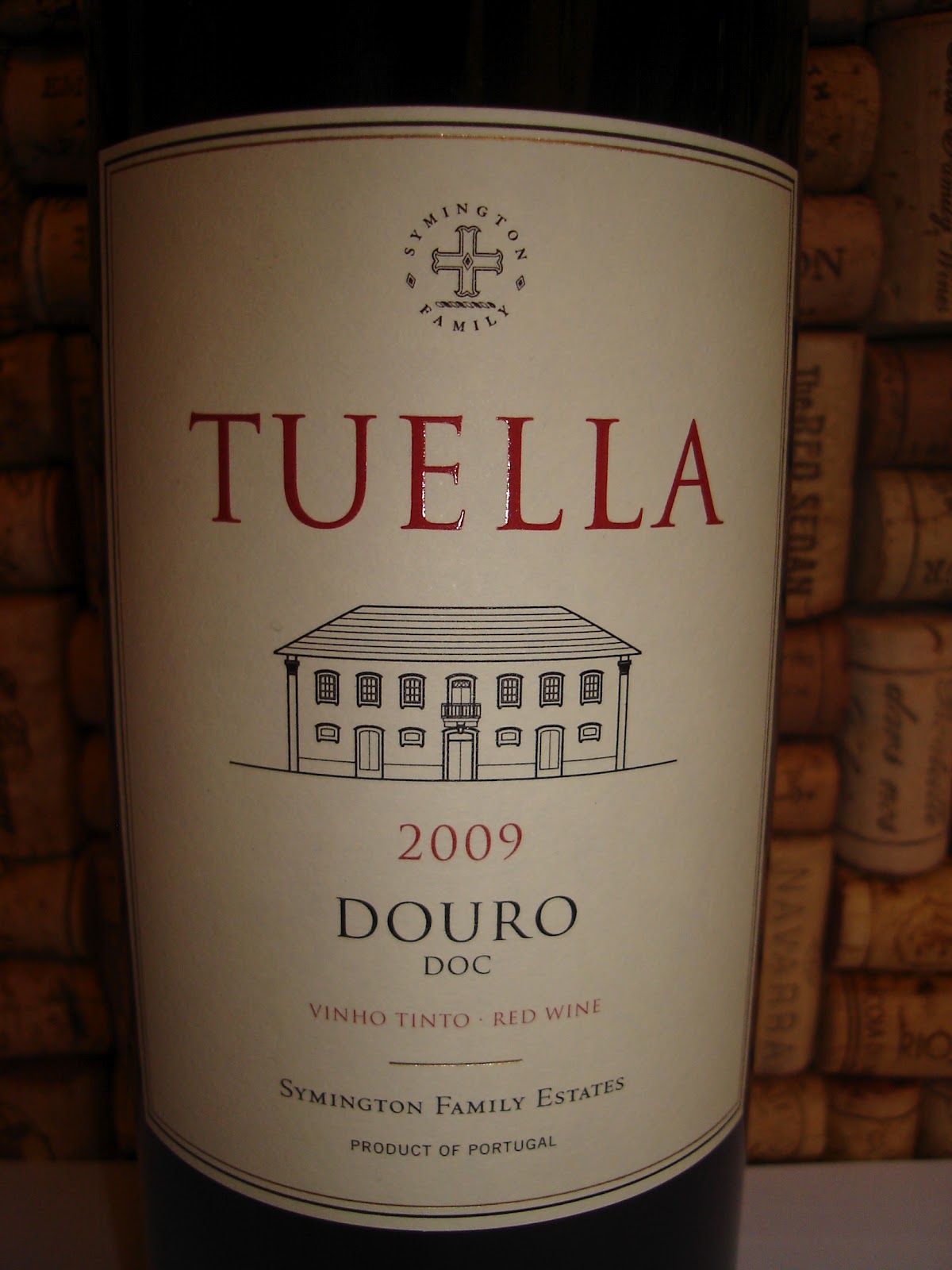
I saw a bit of a worrying article this morning (via André Peres) suggesting that the way forward for Portuguese wine was via international varieties. I genuinely hope not. I'm always recommending Portuguese wines like this excellent Tuella from the Symington Estate to friends and family I think that generally Portugal offers some great wines at some very keen price points. However, in a country where most people buy their wines as another commodity, something chucked in the supermarket trolley along with the toilet roll and the dog food, Portuguese wines are not a great seller. Why? Well people buy the familiar, often through positive association; having enjoyed a Sauvignon Blanc they'll try another, and that's an awful lot more difficult when the varieties are a speciality of a region and you're not going to see very much (if anything) of them elsewhere.

I think it would be a shame if Portugal's unique identity was lost in favour of producing more homogenised wines the likes of which we see from every other wine producing country. Yes, there might be a short term gain in planting international varieties, but in the long term the investment would be better off going into establishing names like Touriga Nacional and Tinta Barroca in the wine drinking public's consciousness. I'm hoping that Portuguese wines, like those of Italy, retain their identity for a long time yet - go on, give them a try!

Tuella Tinto Douro 2009, lots of body and autumnal fruit, and very indicative of what Portugal's native grapes can offer - who needs Cabernet Sauvignon? A bargain at £7.99 from Majestic.